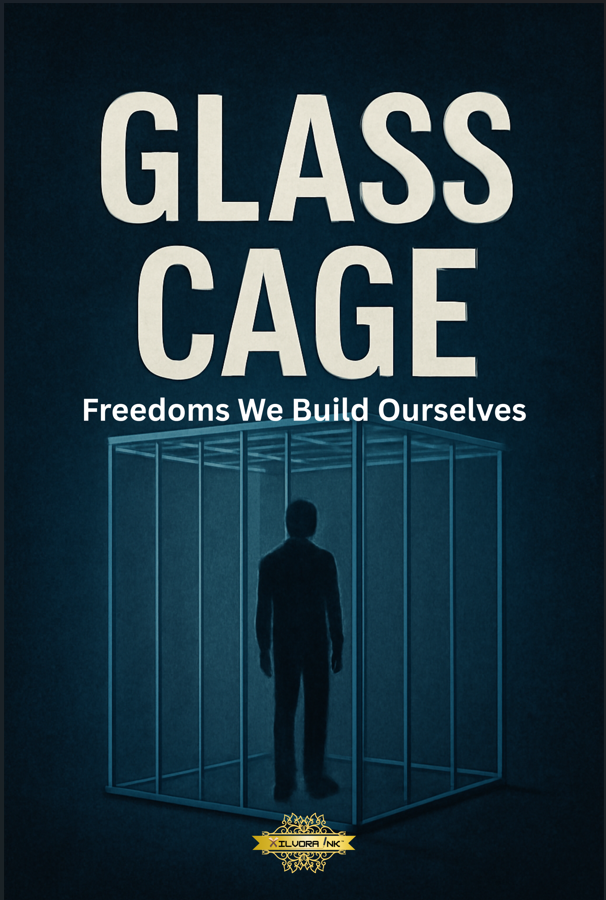
Glass Cage: Freedoms We Build Ourselves
About This Book
Some prisons are invisible, constructed carefully from choice, habit, and fear. Glass Cage explores how freedom can exist in appearance while confinement grows quietly within.
The novel follows a protagonist who believes they are in control—successful, independent, unrestricted. Yet subtle limits begin to surface: decisions avoided, truths softened, desires postponed. The cage is transparent, built not by force but by self-protection. Nothing locks them in except the need to remain unbroken.
The narrative unfolds through moments of realization rather than rebellion. Comfort becomes constraint. Safety turns restrictive. The glass walls allow vision without movement, clarity without courage. Escape would require risk—and risk threatens the identity so carefully maintained.
Rather than dramatizing captivity, the story examines consent. How often do people trade freedom for predictability? How easily does control become containment?
Key themes explored include:
• Self-imposed limitations
• Freedom versus emotional safety
• Fear disguised as choice
• Identity shaped by restraint
• Liberation through self-awareness
Glass Cage reveals how the hardest barriers to break are the ones we construct ourselves—clear, convincing, and quietly absolute.
Book Details
| Title | Glass Cage: Freedoms We Build Ourselves |
|---|---|
| Author(s) | Xilvora Ink |
| Language | English |
| Category | Psychological Fiction |
| Available Formats | Paperback |